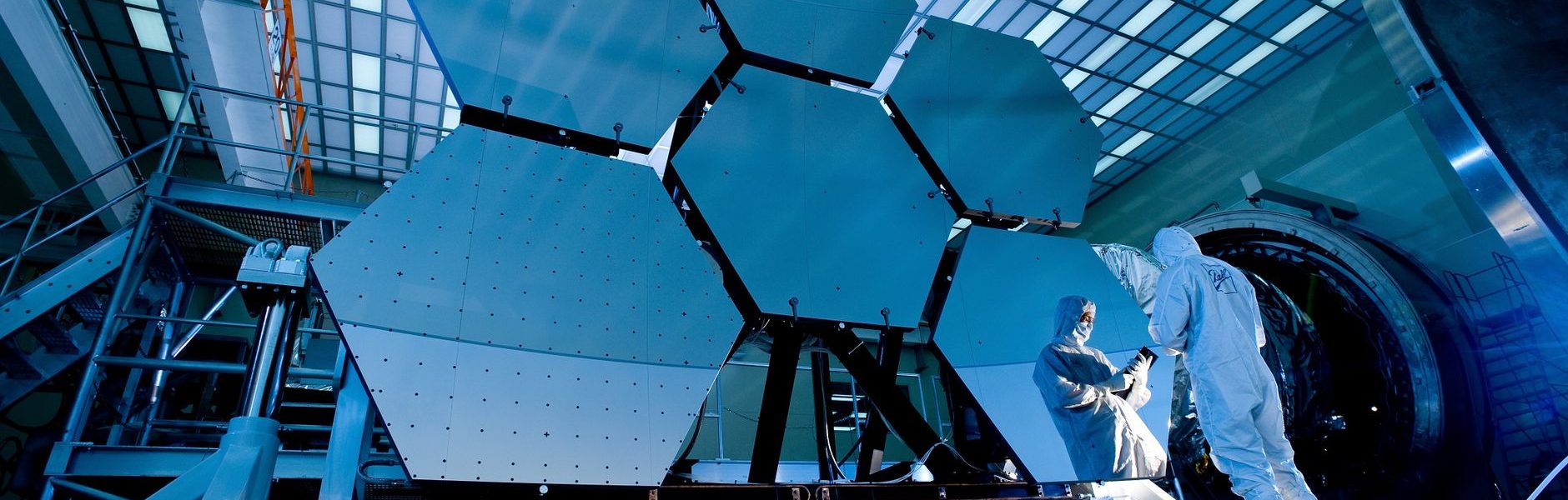

NASA Roman telescope has shared its first test image, showcasing groundbreaking science that promises to enhance our understanding of the universe.
Introduction to NASA’s Roman telescope
The NASA Roman telescope, an innovative space observatory, is set to transform our understanding of the universe. Designed to complement the Hubble and James Webb telescopes, it boasts a remarkable 300-megapixel camera that captures stunning detail across vast expanses of space.
In recent developments, NASA has shared its first test image from the Roman telescope, showcasing its extraordinary capabilities. This initial glimpse highlights the advanced technology that will enable astronomers to explore cosmic phenomena with unprecedented clarity.
The Roman telescope is not just a technological marvel; it also represents a significant advancement in scientific research. With its wide-field view, it will allow researchers to study various astronomical events, from the formation of galaxies to the behavior of exoplanets. The telescope’s ability to survey large areas of the sky in a short period will facilitate numerous discoveries, furthering our knowledge of the cosmos.
Through its mission, the NASA Roman telescope aims to answer fundamental questions about the universe, such as the nature of dark energy and the distribution of dark matter. As the telescope prepares for its launch, the scientific community eagerly anticipates the groundbreaking insights it promises to deliver.
Significance of the 300-megapixel camera
The significance of the 300-megapixel camera aboard the NASA Roman telescope cannot be overstated. This state-of-the-art instrument is set to revolutionize our understanding of the universe, offering unprecedented detail and clarity in astronomical observations.
With its vast imaging capabilities, the camera will enable scientists to capture expansive views of the cosmos, facilitating a deeper exploration of celestial phenomena. The sheer resolution of the images produced will allow researchers to:
- Identify distant galaxies and their formation processes, shedding light on the evolution of the universe.
- Study dark energy and dark matter, crucial components of our universe that remain largely mysterious.
- Explore exoplanets and their atmospheres, potentially revealing conditions suitable for life.
- Map the Milky Way with unparalleled precision, advancing our knowledge of our own galaxy.
The insights gained from the 300-megapixel camera will not only expand the horizons of astronomical research but also inspire future generations of scientists. The NASA Roman telescope is a testament to human ingenuity and the quest for knowledge, poised to deliver groundbreaking discoveries that could redefine our understanding of the universe.
First test image details
Nasa has recently unveiled the first test image captured by the Roman telescope, showcasing the remarkable capabilities of its 300-megapixel camera. This initial image serves as a proof of concept for the telescope’s advanced technology, which promises to revolutionize our understanding of the universe.
The test image features a field of galaxies, providing a glimpse into the vastness of space and the intricate details that the Roman telescope can capture. Key details of the image include:
- Resolution: The stunning clarity of the image highlights the telescope’s ability to resolve distant astronomical objects.
- Field of View: The Roman telescope’s wide field of view allows it to observe large areas of the sky, making it ideal for surveying celestial phenomena.
- Color Accuracy: The test image demonstrates the camera’s capability to capture accurate color representations of various cosmic entities.
This first test image not only marks a significant milestone for NASA’s Roman telescope but also sets the stage for groundbreaking scientific advancements. As researchers prepare for the telescope’s upcoming mission, the excitement surrounding its potential to uncover new insights into dark energy, exoplanets, and the early universe continues to grow.
Future implications for astronomy
The future implications for astronomy are immense with the launch of the NASA Roman telescope. This cutting-edge instrument is poised to revolutionize our understanding of the universe through its advanced capabilities.
One of the most significant advancements will be in the field of exoplanet research. The Roman telescope’s ability to survey vast areas of the sky in unprecedented detail will allow scientists to identify new planets and analyze their atmospheres, potentially revealing conditions suitable for life.
Additionally, the telescope’s 300-megapixel camera will assist in studying dark energy and dark matter, two of the most enigmatic components of the cosmos. By capturing high-resolution images and data, astronomers hope to uncover the secrets of how these forces shape the universe’s expansion.
The implications extend beyond mere discovery, as the data collected will fuel numerous scientific collaborations. Researchers from various disciplines will leverage the findings of the NASA Roman telescope, fostering a new era of interdisciplinary science.
Moreover, the insights gained may inspire future generations of scientists and astronomers, igniting curiosity about the universe and our place within it. As we continue to explore, the Roman telescope stands as a beacon of innovation and possibility.
Public response to NASA’s announcement
The public response to NASA’s announcement regarding the Roman telescope has been overwhelmingly positive, with many expressing excitement about the future of astronomical research. The unveiling of the first test image from the telescope’s advanced 300-megapixel camera has sparked widespread enthusiasm among both amateur astronomers and professionals alike.
Many social media users took to platforms like Twitter and Facebook to share their awe at the clarity and detail presented in the test images. One user remarked, “This is a game changer for our understanding of the universe!”, while another emphasized the importance of the telescope by stating, “NASA’s Roman telescope will open new frontiers in space exploration.”
Several scientists have also highlighted the potential breakthroughs that could arise from the Roman telescope’s capabilities. Dr. Ashley Parker, an astrophysicist, noted, “The Roman telescope will revolutionize our ability to study exoplanets and dark energy, paving the way for discoveries we can only imagine.”
Overall, the excitement surrounding the NASA Roman telescope reflects a growing interest in space exploration and the scientific advancements it promises. As the mission progresses, the anticipation for its contributions to our understanding of the cosmos continues to build.
The NASA Roman telescope is set to revolutionize our understanding of the universe by providing unprecedented clarity and detail. With the capabilities of the NASA Roman telescope, scientists can explore cosmic phenomena like never before, marking a significant leap in astronomical research.
Photo by Pixabay on Pexels
Sources
Related reading