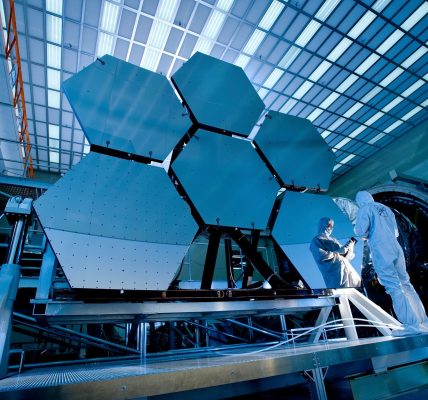

The Mysterious Mercury spacecraft has arrived at its destination, ready to uncover the secrets of the solar system’s smallest planet. This mission promises to provide groundbreaking insights into Mercury’s composition and history.
What We Know About Mercury
The Mysterious Mercury spacecraft represents a significant leap in our understanding of the solar system’s innermost planet. As the closest planet to the Sun, Mercury has long intrigued astronomers and scientists alike, yet much about its surface and composition remains elusive. The recent arrival of this spacecraft marks a new chapter in planetary exploration, promising to unveil secrets that have puzzled researchers for decades.
What we know about Mercury is limited but fascinating:
- Size and Composition: Mercury is the smallest planet in the solar system, with a diameter of about 3,032 miles. Its core makes up a large portion of its volume, leading to speculations about its magnetic field.
- Extreme Temperatures: The planet experiences extreme temperature variations, with daytime highs reaching up to 800 degrees Fahrenheit and nighttime lows plunging to -330 degrees Fahrenheit.
- Surface Features: Mercury’s surface is covered in craters, cliffs, and vast plains, which suggest a history of extensive geological activity.
- Thin Atmosphere: The planet has a very thin atmosphere, composed mostly of oxygen, sodium, hydrogen, and potassium, making it unable to support life as we know it.
The Mysterious Mercury spacecraft aims to gather data that could answer many outstanding questions about the planet’s formation, evolution, and potential for future exploration.
The Journey of the Spacecraft
The journey of the Mysterious Mercury spacecraft has captivated scientists and space enthusiasts alike. Launched with the aim of unveiling the secrets of the solar system’s innermost planet, this mission has taken years of planning and execution. The spacecraft embarked on its voyage from Earth, where it was carefully constructed and tested to withstand the harsh conditions of space.
Throughout its journey, the spacecraft has encountered numerous challenges, from navigating gravitational assists to ensuring its instruments remain functional in extreme temperatures. The mission team has executed a series of complex maneuvers, including:
- Utilizing flybys of Venus and Earth to gain speed and adjust its trajectory.
- Adjusting the spacecraft’s orientation to maximize solar energy absorption.
- Communicating with ground control to monitor and manage its systems remotely.
As it approaches Mercury, the spacecraft prepares for a series of detailed observations. Scientists hope that the data collected will provide insights into Mercury’s composition, magnetic field, and geological history. The Mysterious Mercury spacecraft is not just a technological marvel; it represents humanity’s relentless curiosity about the universe.
The anticipation surrounding its arrival at Mercury is palpable, as researchers eagerly await the first images and data, which could redefine our understanding of this enigmatic planet.
Key Objectives of the Mission
The Mysterious Mercury spacecraft is set to embark on a groundbreaking mission with several key objectives that promise to unravel the secrets of the innermost planet in our solar system. Scientists have outlined the following goals:
- Mapping Mercury’s Surface: One of the primary objectives is to create high-resolution maps of Mercury’s surface. This will help scientists understand its geological history and the processes that have shaped it over billions of years.
- Studying the Planet’s Magnetic Field: Mercury has a unique magnetic field that offers insights into its core dynamics. The spacecraft will investigate the magnetic properties and interactions with solar winds.
- Analyzing Surface Composition: The mission aims to analyze the mineral composition of Mercury’s surface. By studying the elements present, researchers hope to learn about the planet’s formation and evolution.
- Investigating Polar Regions: The spacecraft will focus on the polar regions of Mercury, where shadowed craters may contain water ice. Understanding these areas could reveal vital clues about the planet’s history.
- Understanding Exosphere Dynamics: The Mysterious Mercury spacecraft will also study the planet’s thin exosphere, looking at how it interacts with solar radiation and contributes to Mercury’s unique environment.
These objectives highlight the ambitious goals of the mission, which aims to deepen our understanding of Mercury and its enigmatic characteristics.
Challenges Faced in Space Travel
The journey of the mysterious Mercury spacecraft has not been without its challenges. Space travel, especially to a planet as enigmatic as Mercury, presents unique hurdles that engineers must overcome. Some of the most significant challenges faced include:
- Extreme Temperatures: Mercury experiences the most extreme temperature fluctuations in the solar system. The spacecraft must be equipped with advanced thermal protection systems to withstand temperatures ranging from scorching highs to frigid lows.
- Gravitational Forces: The trajectory to Mercury involves navigating complex gravitational forces from the Sun and other planets. This requires precise calculations and maneuvers to ensure the spacecraft reaches its destination safely.
- Communication Delays: As the spacecraft ventures closer to the Sun, communication delays can occur due to the intense solar interference. Engineers have had to develop robust communication systems to maintain contact with the spacecraft.
- Radiation Exposure: Being near the Sun means the spacecraft is subjected to high levels of radiation. Protective measures must be in place to safeguard sensitive instruments and ensure the longevity of the mission.
Despite these hurdles, the mission continues to provide invaluable data about Mercury, revealing insights that were previously shrouded in mystery. The mysterious Mercury spacecraft stands as a testament to human ingenuity and determination in the face of the unknown.
Previous Missions to Mercury
Previous missions to Mercury have paved the way for our understanding of this enigmatic planet. Despite its proximity to the Sun, Mercury remains one of the least explored planets in our solar system. The Mysterious Mercury spacecraft aims to uncover its secrets, building on the findings of earlier missions.
The first spacecraft to visit Mercury was Mariner 10, launched in 1973. It made three flybys between 1974 and 1975, providing the first close-up images of the planet’s surface. Mariner 10 revealed that Mercury has a heavily cratered landscape, similar to the Moon, but also showcased its unique features such as the vast plains and an extensive iron core.
In 2004, the MESSENGER mission followed, becoming the first spacecraft to orbit Mercury. Over its four-year mission, MESSENGER captured over 250,000 images, offering insights into the planet’s geology and its thin atmosphere. It confirmed the presence of water ice in permanently shadowed craters and discovered a magnetic field.
These missions laid the groundwork for the current exploration by the Mysterious Mercury spacecraft. By analyzing data from previous missions, scientists hope to address lingering questions about Mercury’s formation and evolution. The journey continues as we strive to unlock the mysteries of this fascinating planet.
What to Expect from the Data
The arrival of the mysterious Mercury spacecraft marks a significant milestone in our understanding of the solar system. As data begins to stream back to Earth, scientists eagerly anticipate several key insights that could reshape our knowledge of this enigmatic planet.
One of the primary expectations is a detailed analysis of Mercury’s surface composition. The spacecraft is equipped with advanced imaging technology that will allow researchers to map the planet’s geological features with unprecedented clarity. This data could reveal the history of Mercury’s formation and its volcanic activity.
Additionally, the spacecraft aims to study Mercury’s magnetic field, which is unique among terrestrial planets. Understanding the origin and dynamics of this magnetic field could provide clues to the planet’s internal structure and core composition.
Another area of interest is Mercury’s thin atmosphere, or exosphere. The spacecraft will collect information on the elements present in this tenuous layer and how they interact with solar winds. This research could offer insights into planetary atmospheres in general, including those of exoplanets.
Lastly, scientists hope to gain a better understanding of Mercury’s extreme temperature fluctuations. Data on these temperature changes could enhance our knowledge of thermal dynamics on rocky planets.
In summary, the data from the mysterious Mercury spacecraft promises to unlock secrets that have eluded scientists for decades, paving the way for future explorations.
Future of Planetary Exploration
The future of planetary exploration is poised for significant advancements, particularly with the recent arrival of the mysterious Mercury spacecraft. This mission marks a pivotal moment in our understanding of the innermost planet in our solar system, opening up new avenues for research and discovery.
As scientists analyze the data collected, they are optimistic about the potential findings that could reshape our knowledge of planetary formation and evolution. The mysterious Mercury spacecraft is designed to investigate key aspects of Mercury, such as its geological history, the composition of its surface, and the dynamics of its thin atmosphere.
In addition to enhancing our understanding of Mercury, this mission is expected to pave the way for future explorations of other celestial bodies. The technology and methodologies developed during this mission can be adapted for upcoming projects targeting distant planets and asteroids.
Looking ahead, the scientific community anticipates not only the results from this mission but also the collaborative efforts it may inspire among international space agencies. As we continue to push the boundaries of space exploration, the lessons learned from the mysterious Mercury spacecraft will undoubtedly play a crucial role in our quest to uncover the secrets of the universe.
In summary, the future of planetary exploration is bright, with the mysterious Mercury spacecraft serving as a beacon of possibility for what lies ahead in our journey through the cosmos.
By jurvetson via Openverse
References
Related stories